datamatics is an art project that explores the potential to perceive the invisible multi-substance of data that permeates our world. It is a series of experiments in various forms - audiovisual concerts, installations, publications and CD releases - that seek to materialise pure data.
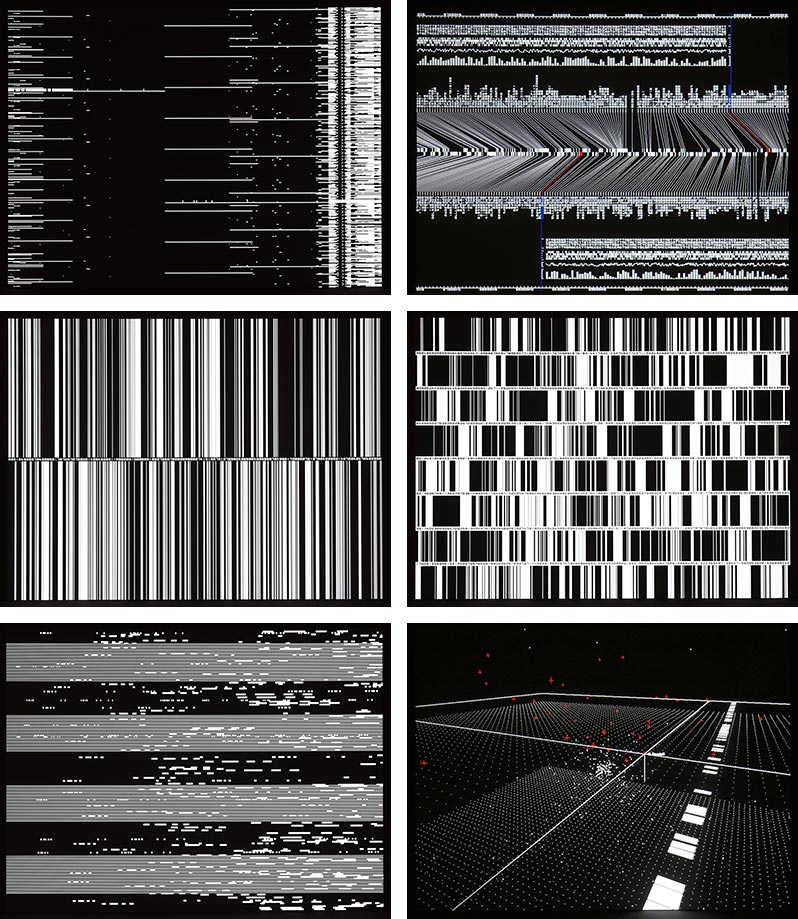
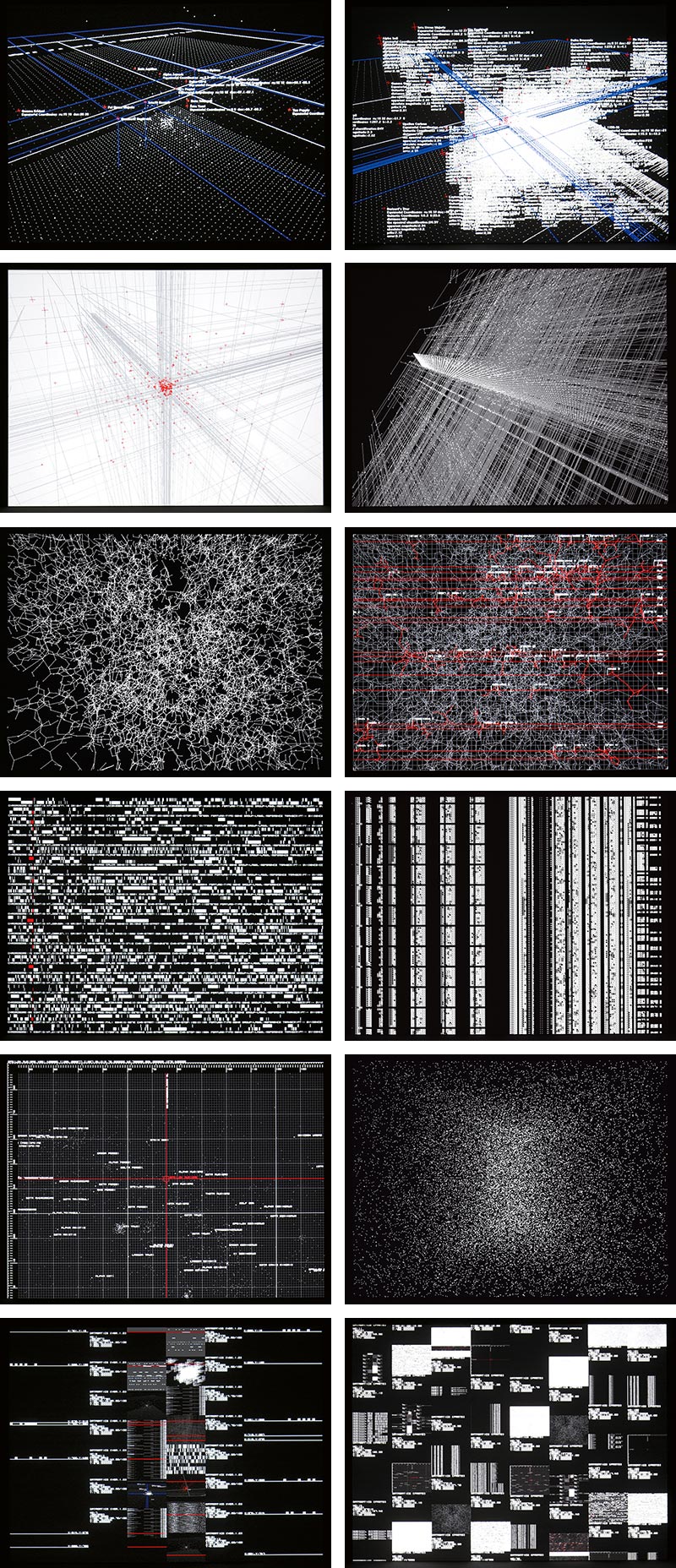
Using pure data as a source for sound and visuals, datamatics combines abstract and mimetic presentations of matter, time and space. datamatics is the second audiovisual concert in the datamatics series. Projecting dynamic computer-generated imagery in pared down black and white with striking colour accents, the intense yet minimal graphic renderings of data progress through multiple dimensions. From 2D sequences of patterns derived from hard drive errors and studies of software code, the imagery transforms into dramatic rotating views of the universe in 3D, whilst in the final scenes four-dimensional mathematical processing opens up spectacular and seemingly infinite vistas. A powerful and hypnotic soundtrack reflects the imagery through a meticulous layering of sonic components to produce immense and apparently boundless acoustic spaces.
datamatics [ver 2.0] is the full–length version of this audiovisual concert. With a commissioned second part added, datamatics [ver.2.0] is significantly developed from the earlier version of this piece which premiered in March 2006. Driven by the primary principles of datamatics, but objectively deconstructing its original elements – sound, visuals and even source codes – this work creates a kind of meta–datamatics. Real–time program computations and data scanning are employed to create an extended new sequence that is a further abstraction of the original work. The technical dynamics of the piece, such as its extremely fast frame rates and variable bit depths, continue to challenge and explore the thresholds of our perceptions.
| credits | directed by Ryoji Ikeda [prototype-ver.1.0] [ver.2.0] co-produced by Les Spectacles vivants, Centre Pompidou, Yamaguchi Center for Arts and Media (YCAM), 2008 |

| materials | 9 LED displays, 9 computers | ||
| dimensions | 71.7cm x 41.6cm (each) | ||
| date | place |
|
||
concept, composition: Ryoji Ikeda |

| materials | 5 LED displays, 5 computers | ||
| dimensions | 71.7 x 41.6 cm (each) | ||
| date | place |
|
||
concept, composition: Ryoji Ikeda
|


| materials | LED display, computer | ||||||||||||||
| dimensions | W71.7 x H41.6 cm | ||||||||||||||
| date | place |
|
||||||||||||||
| credits | concept, composition: Ryoji Ikeda |
||||||||||||||

| materials | LCD monitor displays, computers | ||||
| dimensions | W35.6 x H61.1 cm (each) | ||||
| date | place |
|
||||
concept, composition: Ryoji Ikeda |


| materials | LED panels, computer, speakers | ||||
| dimensions | W24 x H3 m | ||||
| date | place |
|
||||
concept, composition: Ryoji Ikeda commissioned by Alternative Kyoto 2021 |

| materials | OLED monitor displays, computers, speakers | ||||
| dimensions | W0.8 x D14.5 m | ||||
| date | place |
|
||||
concept, composition: Ryoji Ikeda |


| materials | 3 Full-HD LCD monitor display, computer, speakers | ||||
| dimensions | 364.5 x 68.4 cm | ||||
| date | place |
|
||||
| credits | concept, composition: Ryoji Ikeda |


| materials | 3 Full-HD LCD display, computer, speakers | ||
| dimensions | W364.5 x H68.6 cm | ||
| date | place |
|
||
| credits | concept, composition: Ryoji Ikeda |

| materials | DLP projector, computer, speakers | ||||||||
| dimensions | W8.0 x H7.0 x D5.0 m | ||||||||
| date | place |
|
||||||||
| credits | concept and composition: Ryoji Ikeda |


Two large video images are projected face-to-face onto the walls in the large exhibit space in Yilan. Each wall of image is about 38 meters long, two walls will be covered by 12 video projectors in total.
Massive scientific data sets are mathematically depicted onto walls as maps of the Universe, molecular structures of protein, DNA sequences, 4-dimensional mathematical hypercubes and super-highway of raw data etc.
Both large walls of image and the sound components are tightly synchronised each other and artistically orchestrated as a whole symphony, which brings “total sensory experiences” to visitors.
| materials | 12 video projectors, computer, speakers | ||||
| dimensions | W41.3 x H4.5 x D36.0 m | ||||
| date | place |
|
||||
| credits | concept, composition: Ryoji Ikeda |

| materials | LED screen, computers, loudspeakers | ||
| dimensions | W100.0 x H4.0 m | ||
| date | place |
|
||
| credits | concept, composition: Ryoji Ikeda |


| materials | 3 DLP projectors, computers, speakers | ||
| dimensions | dimensions variable (suggested: W10 x H12 x D22.5 m) | ||
| date | place |
|
||
| credits | concept, composition: Ryoji Ikeda |

| materials | 3 DLP projectors, computers, speakers | ||||
| dimensions | W15.0 x H3.0 x D7.0 m | ||||
| date | place |
|
||||
| credits | concept, composition: Ryoji Ikeda |


| materials | 7 DLP projectors, computers, speakers | ||
| dimensions | dimensions variable (suggested: W2.5 x H3.5 x D22.0 m) | ||
| date | place |
|
||
| credits | concept, composition: Ryoji Ikeda |


| materials | 3 DLP projectors, computers, speakers | ||
| dimensions | dimensions variable | ||
| date | place |
|
||
| credits | concept, composition: Ryoji Ikeda |
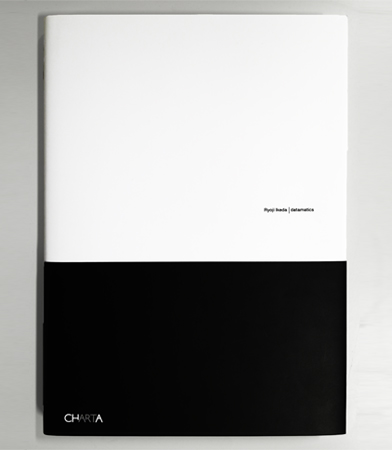
author/text: Kazunao Abe, Maria Belen Saez de Ibarra, Benjamin Weil
pages: 144
binding: hardback
illustrations: 48 in color
language: english/spanish
price: €39.00/$47.50
ISBN: 9788881588343
order online: amazon.com / amazon.fr / amazon.jp
| dimensions | 18.2 x 25.7 cm | ||
| date | publisher |
|


| materials | 5 DLP projectors, computers, speakers | ||
| dimensions | dimensions variable (suggested: W7.0 x H9.0 x D30.0 m) | ||
| date | place |
|
||
| credits | concept, composition: Ryoji Ikeda |
| materials | 9 monitors, 9 computers, 9 speakers | ||
| dimensions | W40 x H70 x D40 cm (each) | ||
| date | place |
|
||
| credits | concept, composition: Ryoji Ikeda |


| materials | LED 27inch displays, computers, speakers, wooden panels | ||||||||||||||||||||||||||||
| dimensions | W40.0 x H70.0 x D65.0 cm (each) | ||||||||||||||||||||||||||||
| date | place |
|
||||||||||||||||||||||||||||
| credits | concept, composition: Ryoji Ikeda |
||||||||||||||||||||||||||||

| materials | 35mm microfilm, LED bulbs, wooden panels, acrylic panels | ||
| dimensions | W805.5 × H70.0 × D17.5 cm | ||
| date | place |
|

| materials | 35mm microfilm, LED bulbs, wooden panels, acrylic panels | ||
| dimensions | W805.5 × H70.0 × D17.5 cm | ||
| date | place |
|

| materials | 8 speakers, computer | ||
| dimensions | dimensions variable | ||
| date | place |
|
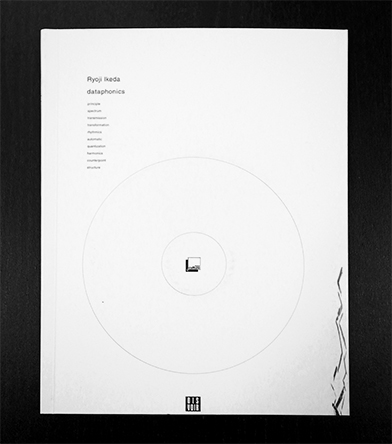
author/text: Ryoji Ikeda
programming & design: Tomonaga Tokuyama
printing: Tallers Gràfics Soler, S.A. Spain Europe
pages: 64
binding: paperback
illustrations: 62 b/w illustrations
language: english
ISBN: 9782914563512
features: incl. CD
| dimensions | 16.5 x 21.5 cm | ||||||||
| date | publisher |
|
||||||||
| credits |
|

| materials | 35mm film, LED lamps, acrylic panels, wooden panels | ||
| dimensions | W180.0 x H70.0 x D12.0 cm | ||
| date | place |
|

| materials | 9 monitors, 9 computers, 9 speakers | ||
| dimensions | W40 x H70 x D40 cm (each) | ||
| date | place |
|
||
| credits | concept, composition: Ryoji Ikeda |

| materials | 3 DLP projectors, computers, speakers | ||||||||||||
| dimensions | dimensions variable (suggested: W24.0 x H6.0 x D12.0 m) | ||||||||||||
| date | place |
|
||||||||||||
| credits | concept, composition: Ryoji Ikeda |


| materials | 10 DLP projectors, computers, speakers, wooden plinths | ||||||||||||||||||||||||||||||
| dimensions | dimensions variable (suggested: W27.0 x H6.0 x D8.0 m) | ||||||||||||||||||||||||||||||
| date | place |
|
||||||||||||||||||||||||||||||
| credits | concept, composition: Ryoji Ikeda |

data.scan presents an audio-visual relationship relating to large sets of data from two recent meta-scientific investigations that have mapped the human body and the astronomical universe. The horizontal monitor-based data.scan is registered intimately in relation to the viewer’s body. The dialogue of sound and image in data.scan addresses notions of randomness, extremities of scale, and binaries of the visible/audible and invisible/inaudible.
| materials | LED 24inch display, computer, speaker, wooden panels | ||||||||||||||||||||||||
| dimensions | W38.5 x H70.0 x D57.5 cm | ||||||||||||||||||||||||
| date | place |
|
||||||||||||||||||||||||
| credits | concept, composition: Ryoji Ikeda |


data.tron [8K enhanced version] is an enhanced version of the audiovisual installation data.tron. Each single pixel of visual image is strictly calculated by mathematical principle, composed from a combination of pure mathematics and the vast sea of data present in the world. In this version visitors are literally immersed in the work, as data is seamlessly projected onto the gallery wall and floor from eight sources.
| materials | 8 DLP projectors, computers, 9.2ch sound system | ||
| dimensions | W16.0 x H9.0 x D9.0 m | ||
| date | place |
|
||
| credits | concept, composition: Ryoji Ikeda |

| materials | DLP projector, computer, speakers | ||
| dimensions | W18.0 x H13.5 m (video projection throw distance: D30.0 m) | ||
| date | place |
|
||
| credits | concept, composition: Ryoji Ikeda |


How many points are there in a line?
What is the number of numbers?
How can we verify that the random is random?
data.tron is part of the datamatics project, a series of experiments that explore such questions both physically and mathematically. Visitors will experience the vast universe of data in the infinite between 0 and 1.
data.tron is an audiovisual installation in which each single pixel of visual image is strictly calculated by mathematical principle, composed from a combination of pure mathematics and the vast sea of data present in the world. These images are projected onto a large screen, heightening and intensifying the visitor's perception and total immersion within the work.
| materials | DLP projector, computer, speakers | ||||||||||||||||||||||||||
| dimensions | dimensions variable (suggested: W8.0 x H6.0 m) | ||||||||||||||||||||||||||
| date | place |
|
||||||||||||||||||||||||||
| credits | concept, composition: Ryoji Ikeda |

| materials | DLP projector, computer, speakers | ||||||||
| dimensions | dimensions variable (W8.0 x H6.0 m) | ||||||||
| date | place |
|
||||||||
| credits | concept, composition: Ryoji Ikeda |


A sculptural wall installation, data.film consists of a series of 35mm film mounted in a light box. The image on the film is constructed from microscopically printed data codes and patterns from pure digital sources, while the unusual proportions of the light box (4 cm high, 10 metres wide, 4 cm deep) create a long, narrow strip of film. Only upon close examination by the viewer can the film and its contents be recognised.
| materials | 35mm film, LEDs, aluminum panels, acrylic panels | ||||||
| dimensions | W1000.0 x H4.0 x D5.0 cm | ||||||
| date | place |
|
||||||
| credits | concept, composition: Ryoji ikeda |


data.spectra is the first work of the data.series. Across the entire width of a darkened room is an intensely bright, narrow screen. On moving closer, the screen reveals that the source of the flood of light into the room is a vast array of tiny digits streaming across its surface, seemingly without end.
| materials | 10 DLP projectors, computers, speakers, acrylic panels, wooden walls | ||
| dimensions | W10.0 x H4.0 x D10.0 m (screen size: W1000.0 x H2.5 cm) | ||
| date | place |
|
||
| credits | concept, composition: Ryoji Ikeda |
Developed and researched alongside the radio program series, this multi-channel concert demonstrates the results of an investigation about the fundamental concept of digital, the data of sound and the sound of data. It is performed in a pitch-dark space as a multi-channel concert. A matrixed setup of specific loudspeakers forms a unique spatiotemporal sound field to listeners. The experience is straight-ahead physical and is a series of experiments to test one's potential of how (much) one can perceive and decipher infinite numbers of data-codes in the blind state.


| date | label |
|
||||||||||||||||||||||||||||||||||||||||||||||||||||||||||||||||||||||||
| spec |
|
||||||||||||||||||||||||||||||||||||||||||||||||||||||||||||||||||||||||
| credits | produced by Ryoji Ikeda |